
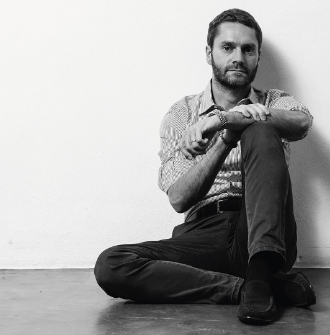
Architect and designer, XXVIII Compasso d’Oro ADI award winner.
Born in 1973, he graduated in Architecture from the Politecnico di Milano. From 1997 to 2004, he lived and worked in London, collaborating with Foster + Partners on complex international projects.
During this period, he contributed to the development of an eight-storey scientific research building at Imperial College and served as Project Manager for Capital City Academy, a secondary school for 1,400 students inaugurated by Tony Blair.
Returning to Italy, after a brief experience with Mario Bellini, he established his own practice, working across architecture and design.
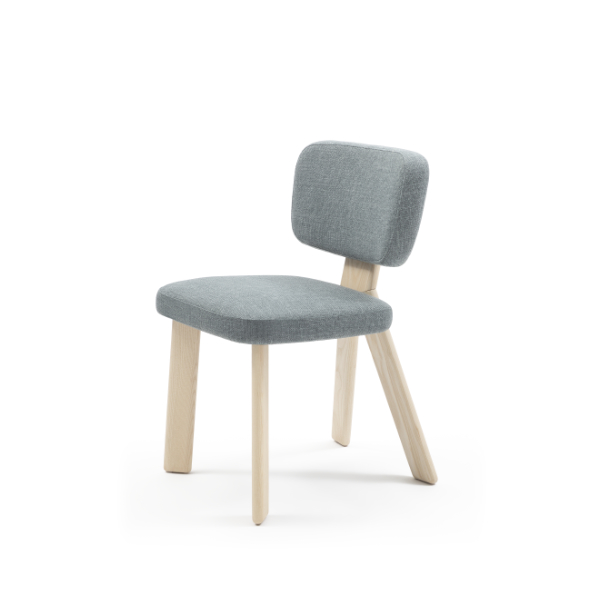
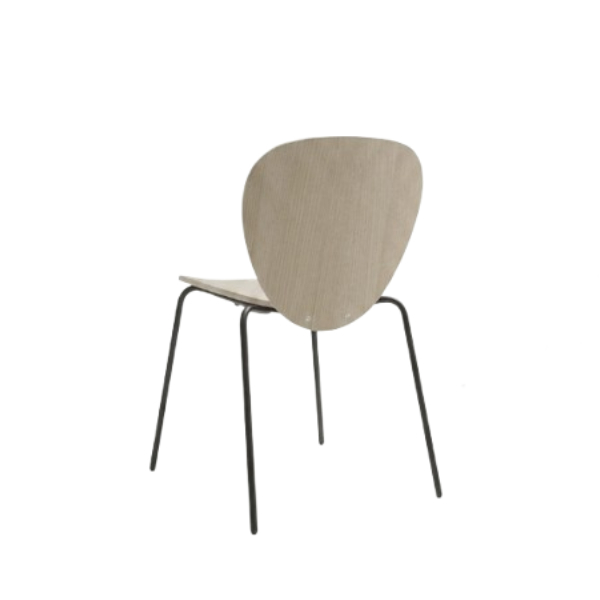
His work is defined by a continuous movement across scales, where objects, spaces, and systems are conceived as part of a single design vision. An approach that integrates intuition, technology and discipline into a coherent and recognisable language.
His projects have received international recognition. The Vertigo lamp is part of the permanent collection of the Vitra Design Museum. He has been awarded the XVIII Compasso d’Oro ADI, alongside Honorable Mentions at the XXI and XXV editions, as well as multiple Red Dot and Good Design Awards and selections in the ADI Design Index.
His work also engages with the evolving conditions of contemporary living, including sustainable architecture. POLINS - Polo Per l’Innovazione strategica - is a CasaClima Class A+ certified building, was selected as a finalist for the Renzo Piano Foundation Award.
DESIGN INSTINCT
«The instinct to design is something deeply human. It is the quiet ability to envision what does not yet exist, a force that has shaped progress throughout history. Yet, having this instinct is not enough. The real challenge lies in trusting it — and in knowing how to give it form.
Many perceive ideas, but few are able to carry them through the complexity of choices, constraints, and contradictions that define the creative process. Instinct is the origin. It is what tells us when an idea is alive. But instinct alone is not sufficient.
The mind continuously negotiates between intuition and rational thought, between freedom and structure, in an attempt to reach clarity. For me, design exists within this tension. It is a discipline that seeks equilibrium — between what we feel and what we understand, between vision and feasibility.
My work is an exploration of that balance. Each project is a response to the present moment, shaped by the technologies and visual language available today, yet guided by something more fundamental: the search for harmony»
Marco Acerbis